Product Description
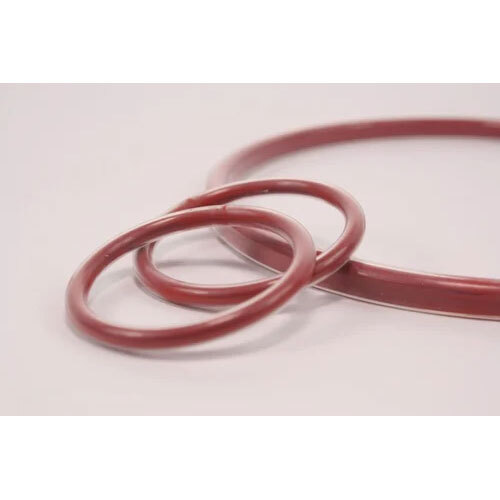
PTFE encapsulated O-Rings are designed to combine the sealing properties of the rubber O-ring with the chemical resistance of Teflon PTFE. They are generally manufactured from Viton or silicone rubber and are coated in a thin moulded layer of Teflon FEP or PFA.Exceptional Chemical and Thermal ResistanceThe PTFE encapsulated O-rings withstand exposure to nearly all chemicals except molten alkali metals and elemental fluorine. They also maintain their sealing integrity under extreme temperatures from -60C up to +260C (+300C for PFA encapsulation), supporting a prolonged service life even in demanding environments.
Versatile Applications and Standards ComplianceThese O-rings are ideal for high-purity and hygienic environments, including chemical processing, food manufacturing, and pharmaceutical production. Certified to FDA and USP Class VI standards, they meet stringent industry regulations. Their excellent permeation resistance further enhances suitability for critical utility systems.
Customizable Sizes for Diverse NeedsWhether you need standard DIN, ISO, or AS568 sizes or require a custom dimension, PTFE encapsulated O-rings are available in a wide range of diameters and cross sections. This flexibility ensures precise fitment for various sealing configurations and operational requirements.
FAQs of PTFE Encapsulated O Rings:
Q: How are PTFE encapsulated O-rings installed in existing systems?
A: PTFE encapsulated O-rings are constructed for easy installation within standard O-ring grooves. Their smooth, non-porous surface and flexibility enable quick placement during system setup or maintenance, streamlining the sealing process without the need for specialized tools.
Q: What benefits do PTFE encapsulated O-rings offer for food and pharmaceutical applications?
A: These O-rings are compliant with FDA and USP Class VI standards, ensuring non-contaminating performance. Their chemical inertness, non-stick surface, and resistance to permeation make them ideal for environments requiring sterility and strong chemical and temperature resistance.
Q: When should I choose between a solid or hollow elastomeric core for these O-rings?
A: Solid cores are preferred for applications requiring higher pressure ratings and improved mechanical robustness. Hollow cores are suitable when enhanced flexibility and lower compression forces are needed, especially in dynamic sealing scenarios.
Q: Where are PTFE encapsulated O-rings most commonly used?
A: These O-rings are predominantly utilized in chemical processing, medical device manufacturing, food production, and any applications demanding reliable, inert seals in aggressive conditions or high-purity environments.
Q: What is the typical process for customizing the dimensions of an encapsulated O-ring?
A: Customization involves specifying the required internal diameter, cross-section thickness, and encapsulation material. Manufacturers can provide rings tailored to DIN, AS568, ISO, or special specifications, supported by certificates upon request.
Q: How does FEP or PFA encapsulation affect service life and temperature resistance?
A: FEP encapsulation delivers excellent performance up to +260C, while PFA extends capability to +300C. Both materials grant superior resistance to chemical attack and permeation, thus ensuring long operational lifespans in harsh environments.
Q: What usage advantages do PTFE encapsulated O-rings have over standard rubber O-rings?
A: Compared to standard rubber O-rings, the PTFE encapsulated variant offers superior chemical resistance, lower friction, higher temperature endurance, and non-stick properties. This renders them maintenance-friendly and less prone to failure in demanding settings.
 GST : 24CJFPP2480R1ZL
 Call Us:- 08045477638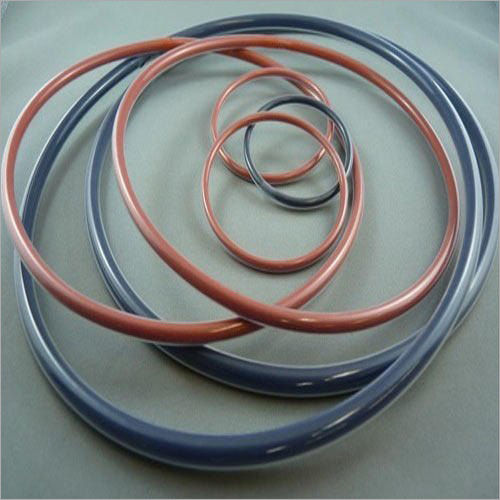





 Get A Quote



 Send Inquiry
 Send SMS
 Call Me Free


