Product Description
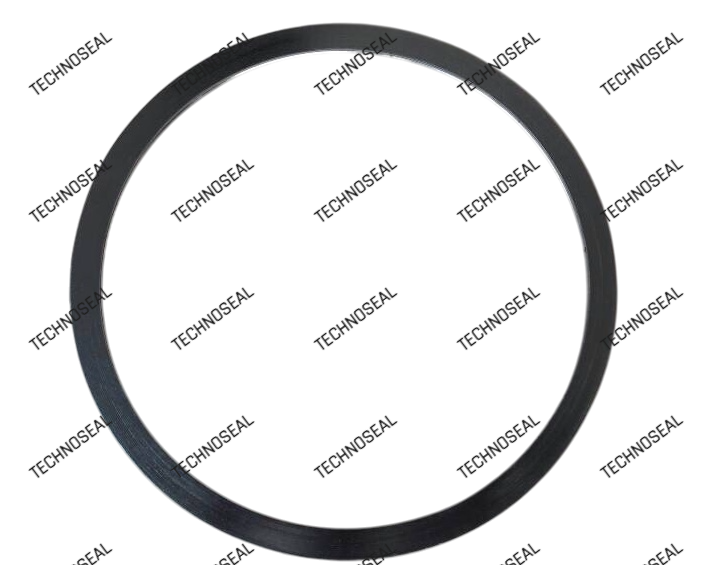
We are offering a qualitative range of Camprofile Gasket that is available in different specifications. Our offered gasket is precisely manufactured using fine quality material and advanced machines as per the defined quality standards. In addition to this, our quality controllers keep an eye on the entire range at every stage of production so as to eradicate any possible defect from it. Longevity, dimensional accuracy and easy to install are features of offered Camprofile Gasket.
Optimal Sealability in Challenging ConditionsEngineered for high integrity, Camprofile gaskets ensure reliable sealing even under varying pressures and temperatures. The standard compression rate of 10-20% and facing thickness of 0.5mm per layer are carefully tailored to suit the demands of steam, oil, chemical, gas, and aggressive media applications.
Wide Range of Profiles and SizesChoose from profiles such as CX, CGI, CCG, or custom configurations to match your installation requirements. Standard thickness is 3 mm (2-7 mm available), and sizes cover DN 15 mm to DN 2000 mm, with special dimensions possible on request, meeting standards like ASME B16.20, DIN, EN, and JIS.
Reliable Materials and Easy InstallationCrafted from stainless steel, carbon steel, or user-specified alloys, these gaskets provide excellent corrosion resistance and dependable hardness (180-280 HB). Each gasket comes fully finished, clean, and ready-to-fit, enabling quick, accurate centering and installation without machining.
FAQ's of Camprofile Gasket:
Q: How do Camprofile gaskets ensure high sealability in varying pressures and temperatures?
A: Camprofile gaskets are designed with a precision-grooved metallic core and soft facing layers, such as graphite or PTFE, which allow for a high compression rate (10-20%). This construction ensures effective sealing across a broad spectrum of pressures (up to 250 bar) and temperatures (up to 550C), making them suitable for demanding applications.
Q: What are the available profile types for Camprofile gaskets and how do I choose the right one?
A: Camprofile gaskets come in CX (without rings), CGI (with inner ring), CCG (with outer ring), and custom profiles. Selection depends on flange design, operating conditions, and specific sealing requirements. Options with inner/outer rings provide added protection against blowout and facilitate centering.
Q: When should a Camprofile gasket be replaced rather than reused?
A: These gaskets are generally recommended for single-use, especially in high-pressure or aggressive media applications. Reuse may compromise sealing integrity, so always inspect for damage or wear, and replace as necessary according to site safety standards and material guidelines.
Q: Where can Camprofile gaskets be used effectively?
A: They are suitable for equipment handling steam, oil, chemicals, aggressive gases, and other demanding media. Camprofile gaskets are widely applied in petrochemical, power generation, chemical processing, and pharmaceutical facilities, matching international standards for diverse installations.
Q: What is the benefit of using Camprofile gaskets with graphite or PTFE facings?
A: Graphite facings provide excellent thermal resistance (-200C to +550C) and chemical compatibility, while PTFE facings suit processes up to +260C, offering superior chemical inertness. Both ensure a reliable seal and enhance gasket adaptability to flange surface finish and pressure variance.
Q: How is a Camprofile gasket installed, and is any special preparation required?
A: Installation is straightforward: the gasket arrives clean, deburred, and precisely sized for centering within the flange. No additional machining or surface preparation is needed, enabling rapid, accurate assembly and minimizing downtime.
Q: What customization options are available for Camprofile gaskets?
A: Manufacturers offer OEM, design-to-drawing, and material customization, including choices for core, facing, ring materials, thickness, and dimension, catering to unique industrial requirements or non-standard flanges across India.
 GST : 24CJFPP2480R1ZL
 Call Us:- 08045477638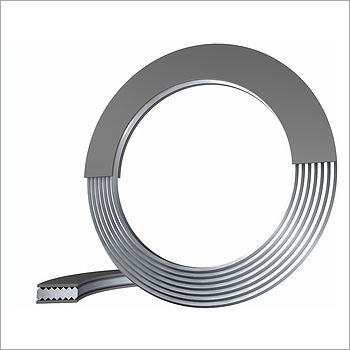





 Get A Quote


 Send Inquiry
 Send SMS
 Call Me Free


