Product Description
PVC (polyvinyl chloride) gaskets are typically made from flexible, durable PVC material and may contain various additives and compounds to enhance their performance. These gaskets are often used in applications involving water, air, and low-pressure gases due to PVC's chemical resistance, low cost, and durability.
Common Components in PVC Gaskets:
- PVC Resin: The main component, providing the gasket with flexibility and durability.
- Plasticizers: Added to increase flexibility and make the PVC softer and more pliable. Phthalates are commonly used, though some applications use non-phthalate plasticizers for health and environmental reasons.
- Stabilizers: To prevent degradation from heat and UV exposure. Lead stabilizers were historically used but are now less common due to health concerns. Modern PVC gaskets often use calcium-zinc or tin-based stabilizers.
- Fillers: Additives like calcium carbonate may be used to increase the strength and reduce costs.
- Colorants: These provide color to the gasket, allowing it to be easily identifiable in some applications.
- Modifiers: Impact modifiers and processing aids may be included to improve the gaskets mechanical properties and ease of manufacturing.
Superior Chemical and UV ResistanceDesigned for industrial use, these PVC gaskets exhibit outstanding resistance to most acids, alkalis, and salts, as well as dependable protection against UV radiation. This robust composition ensures minimal degradation even in aggressive environments, making them suitable for applications that demand chemical stability and prolonged outdoor exposure.
Customizable Solutions for Industrial ApplicationsOur PVC gaskets are manufactured in standard sizes and can be customized to fit unique requirements in thickness and dimensions. Their application spans across various industrial machinery, including sealing in pipe joints, valves, and flanges, guaranteeing leak-proof, reliable connections in systems handling water, mild acids, minerals, or air.
Long Service Life and Easy InstallationWith a projected service life of five to ten years based on usage, these PVC gaskets offer lasting performance. Their flexible design allows for straightforward installation and easy cutting to size, minimizing downtime during maintenance. Proper storage-cool, dry conditions away from sunlight-also extends product life and performance.
FAQ's of PVC Gasket:
Q: How should PVC gaskets be stored to maintain their performance?
A: PVC gaskets should be stored in a cool, dry place away from direct sunlight. This prevents premature aging and preserves their mechanical and chemical resistance properties over time.
Q: What is the recommended process for installing these PVC gaskets?
A: Installation is straightforward: measure and cut the gasket to the required size, then properly align it in the sealing area such as pipe joints or flanges. Ensure surfaces are clean for optimal sealing efficiency.
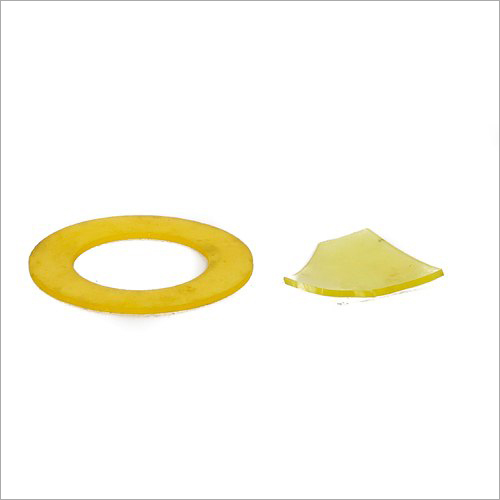
Q: Where can these yellow PVC gaskets be used effectively?
A: These gaskets are designed for industrial applications, particularly in sealing pipe joints, flanges, valves, and fittings. They are effective in systems that handle water, mild acids, alkalis, air, and minerals within recommended temperature and pressure ranges.
Q: What are the primary benefits of choosing this PVC gasket over alternatives?
A: These gaskets provide a combination of excellent chemical and UV resistance, high mechanical strength, and easy customization. Their long service life and adaptability to various industrial applications make them a practical and economical choice.
Q: When should the gasket be replaced to ensure safety and efficiency?
A: Replacement is advised every 5 to 10 years or sooner if there are signs of wear, physical damage, or performance drops such as leaks. Regular inspections will help determine optimal replacement intervals based on usage.
Q: How resistant is the gasket to water absorption and chemical attack?
A: The gasket exhibits very low water absorption (<0.5%) and resists attack from most acids, alkalis, and salts. This makes it ideal for environments where chemical exposure is a concern.
 GST : 24CJFPP2480R1ZL
 Call Us:- 08045477638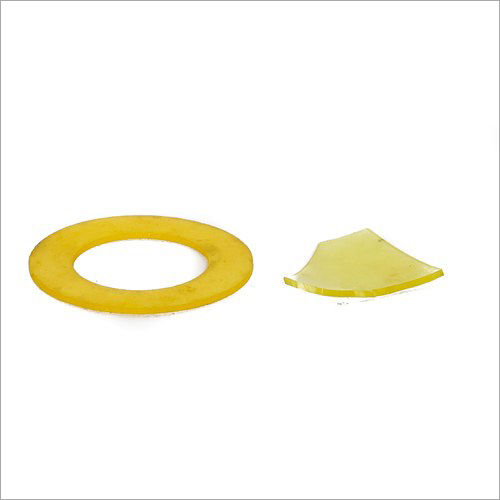





 Get A Quote


 Send Inquiry
 Send SMS


